District Heating and Cooling: The Role of Plate Heat Exchangers
The transition towards decarbonized urban models and compliance with the latest energy efficiency regulations require a profound transformation of the HVAC and industrial sectors.
The transition towards decarbonized urban models and compliance with the latest energy efficiency regulations require a profound transformation of the HVAC and industrial sectors.
In this context, district heating and cooling networks represent one of the key infrastructures for the sustainable management of heating and cooling at both urban and industrial levels.
At the heart of this complex fluid distribution infrastructure, the plate heat exchanger serves as a fundamental heat transfer component, ensuring high performance, health and hygiene safety, and excellent energy efficiency.
What Are District Heating and Cooling Networks?
District heating and district cooling networks are centralized thermal energy distribution systems.
Through an infrastructure of insulated pipes installed beneath public roads and spaces, thermal energy is transferred from one or more production facilities to multiple end users, including residential buildings, commercial complexes, and industrial facilities.
The strength of these systems lies in their ability to harness diverse local energy sources, reducing dependence on traditional fossil fuels and high-impact individual heating and cooling systems.
Primary Energy Sources and Integrated Heat Recovery
Thermal energy production within centralized networks is not limited to dedicated heating plants or conventional chillers. Instead, it can incorporate a highly diversified energy mix:
- Integration of renewable energy sources: Harnessing geothermal energy, biomass, solar thermal energy and, for district cooling, free cooling from natural water bodies such as rivers, lakes, or the sea.
- Combined heat and power (CHP): The simultaneous production of electricity and heat, allowing the heat generated during electricity production to be utilized rather than wasted.
- Heat recovery: Capturing excess thermal energy generated by industrial processes or municipal waste-to-energy plants that would otherwise be released into the environment.
This circular approach to energy management makes it possible to transform potential waste heat into a valuable resource for the entire community.
The Strategic Benefits of Centralized District Heating and Cooling Systems
Adopting district heating and cooling infrastructure can deliver tangible benefits both at the urban network level and for individual end users:
- Energy efficiency: Centralized production makes it possible to optimize load management technologies and utilize renewable energy sources with efficiencies that can exceed those of individual heating and cooling systems.
- Emission reduction: In urban areas, significant reductions in greenhouse gases and airborne pollutants can be achieved by replacing individual boilers and recovering industrial waste heat. The extent of these benefits depends on the energy mix supplying the network.
- Flexibility and reliability: Centralized networks are designed to ensure continuous 24/7 service, professional maintenance management, and the ability to integrate new energy technologies over time.
- Cost reduction: End users can reduce or avoid the costs associated with purchasing, installing, and carrying out major maintenance on individual boilers, heat pumps, or chillers.
Together, these factors make centralized networks a practical solution for achieving the objectives of European directives on energy efficiency and renewable energy, such as the Energy Efficiency Directive (EED) and the Renewable Energy Directive (RED III), supporting the green transition of buildings.
The Key Role of Plate Heat Exchangers in Thermal Networks
Within a district heating and cooling network, the plate heat exchanger acts as the thermal interface between the primary distribution network and the building's secondary circuit, while maintaining hydraulic separation between the two circuits.
The choice of plate heat exchanger technology over other heat transfer solutions is driven by specific engineering considerations:
- Hydraulic separation and health safety: The heat exchanger transfers thermal energy instantaneously without direct contact between the two fluids under normal operating conditions, preventing contamination of the potable water circuit and isolating different operating pressures.
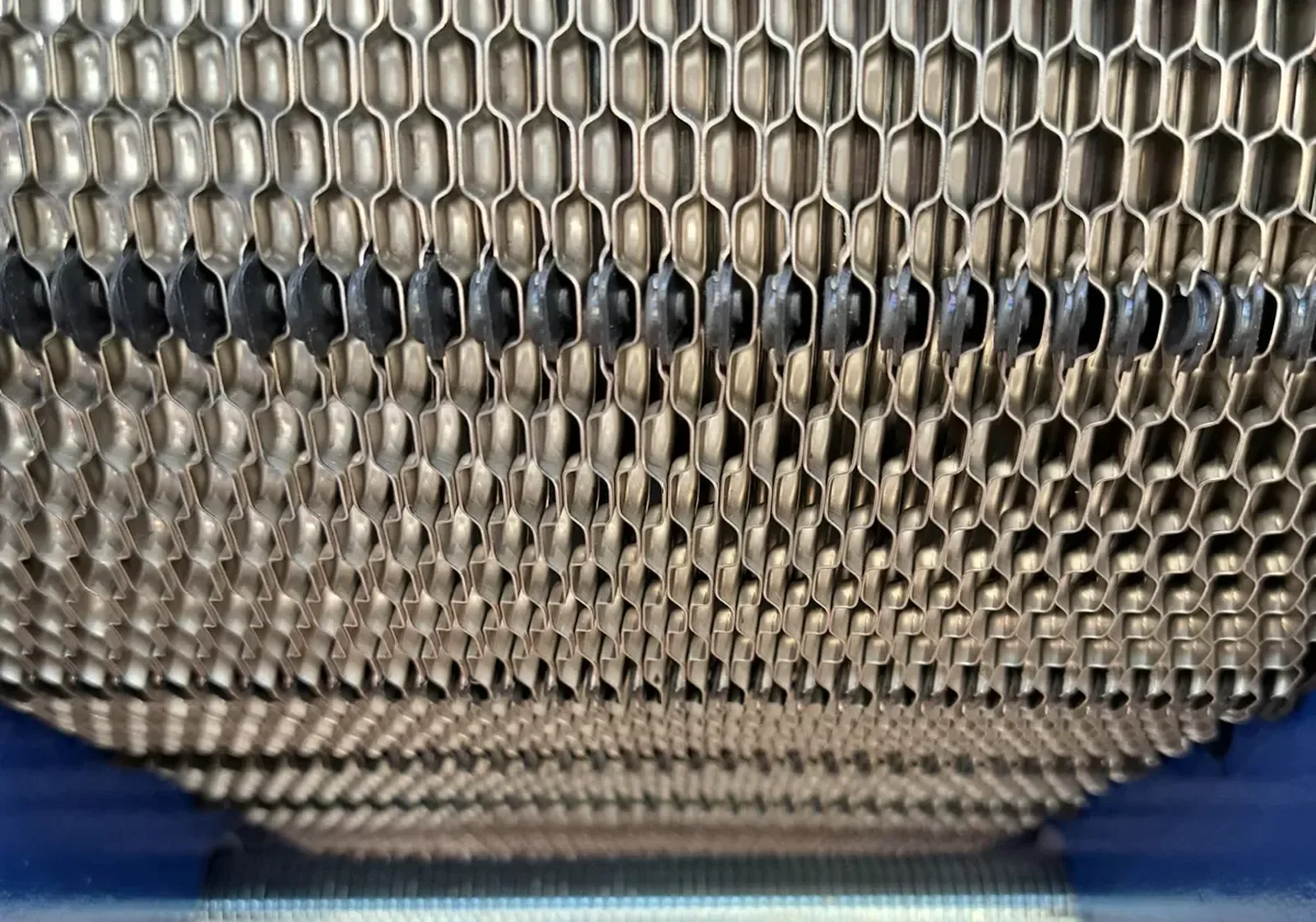
- Extremely high thermal efficiency: The corrugated plate design generates high levels of turbulence even at low fluid velocities, enabling minimal temperature differences between the two circuits. This allows low return temperatures to be achieved while maximizing heat recovery.
- Compact footprint: The large heat transfer surface concentrated within a small volume allows the equipment to be installed even in confined technical rooms or compact, preassembled substations.
Thanks to these design characteristics, plate heat exchangers remain essential components for maximizing energy savings and maintaining the safety of the entire system.
Cipriani PHE's Excellence and Expertise in District Heating and Cooling
With extensive experience in designing and manufacturing heat transfer solutions, Cipriani PHE supports engineers, utilities, and installers in developing highly efficient district heating and cooling networks.
Cipriani PHE's technological and operational expertise delivers tangible value throughout the entire service life of the system:
- Customized design and engineering: Each heat exchanger is precisely sized and engineered according to the specific fluid dynamic, thermal, and dimensional requirements of the application.
- Material quality and structural reliability: The use of certified steels and alloys ensures high corrosion resistance, long service life, and full suitability for sanitary applications.
- Digital platforms and predictive maintenance: Dedicated tools such as MyPHE and PHExpress enable users to identify and track genuine spare parts and purchase them directly through a dedicated e-commerce platform.
- Specialized service network: Collaboration with qualified partners ensures regular maintenance services, essential for preventing fouling and performance deterioration.
Through this combination of advanced engineering and after-sales support, systems equipped with Cipriani PHE technology maintain high operational performance over time.
If you are considering a solution for a district heating or cooling network, contact Cipriani PHE. Our technical specialists will help you identify the most suitable heat exchanger for your application.
Stay Connected with Cipriani PHE
Would you like to discover the latest technological innovations in heat transfer, energy efficiency, and district heating and cooling networks?
Follow our official social media channels for technical insights, real-world case studies, and the latest updates from Cipriani PHE:
- LinkedIn: Stay informed about industry developments and company news by following our official page.